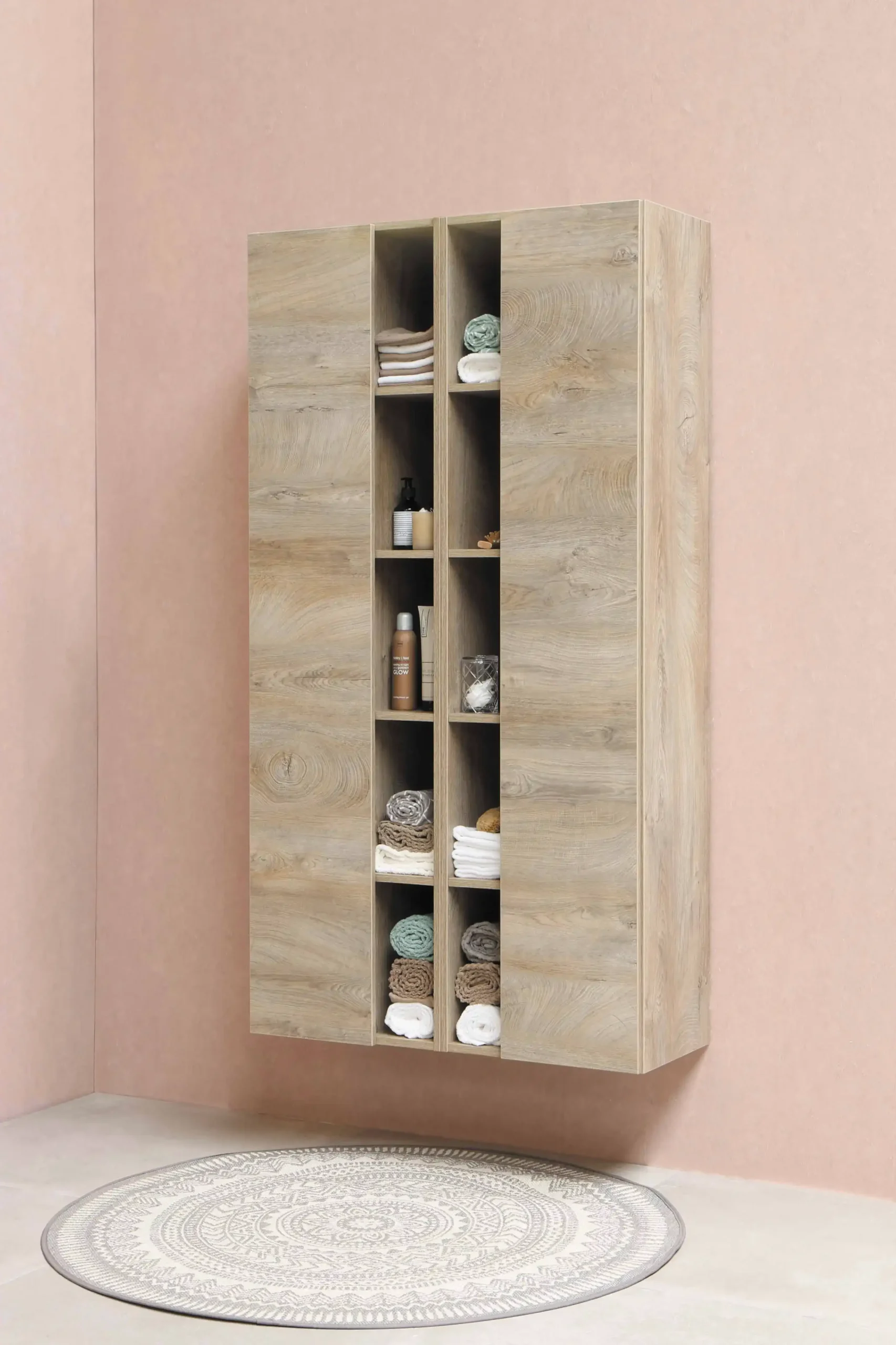
Kitchens, wardrobes, vanities and majlis units made to measure — workshop manufacture, site installation, and specifications you can actually compare.
Joinery is the part of a renovation people touch every day. Cabinet doors, drawer runners, wardrobe interiors, the edge of a worktop.
It is also the part most often subcontracted out and least often specified properly. Two quotes for the same wardrobe can differ by a wide margin purely on carcass material and hardware, and neither line usually appears in the quote.
RSK runs joinery for its own renovation and fit out projects and takes standalone joinery work across Dubai.
Joinery is made in a workshop and then installed on site. Carpentry is cut and fixed on site.
Joinery covers items manufactured to drawings under controlled conditions: cabinets, wardrobes, doors, panelling, staircase parts, reception counters. Because the work happens on a machine bed rather than a site floor, tolerances are tighter and finishes are better.
Carpentry is the on-site work: framing, fixing, hanging doors, structural timber, installation and adjustment. Most joinery still needs carpentry at the end, because a workshop-made unit has to be scribed and fixed to walls that are rarely square.
In practice most UAE companies do both and use the words loosely. The distinction still tells you something useful: where the work happens, and therefore how accurate it is likely to be.
For joinery alone, usually not. It becomes an approval matter when it comes with services.
Installing wardrobes, panelling or storage does not normally trigger a permit, though most buildings still expect notification before contractors and materials arrive, and many require the same access arrangements as any other trade: lift booking, protection and permitted working hours.
It changes once the joinery involves plumbing or electrical work, which kitchens and vanities usually do. At that point the approval route follows the wider renovation rather than the joinery itself.
Most joinery is priced per linear metre, then adjusted for material, finish, hardware and complexity:
Manufacture starts after drawings are approved, not after the order.
The sequence is survey, drawings, approval, material ordering, manufacture, finishing, then delivery and installation. Site measurements are usually taken again once walls are built and plastered, because a unit made to the drawing rather than the finished wall will not fit.
On a renovation this runs in parallel with site work, which is why joinery decisions need locking early. Late changes do not delay manufacture. They delay handover.
Ask for hardware to be named in the quote. If the specification says only fittings, you have no way to compare one price against another.
Send us the room dimensions and what you need made, or a designer's drawing if you have one. We will come and measure, then issue a quotation naming the carcass material, the finish and the hardware.