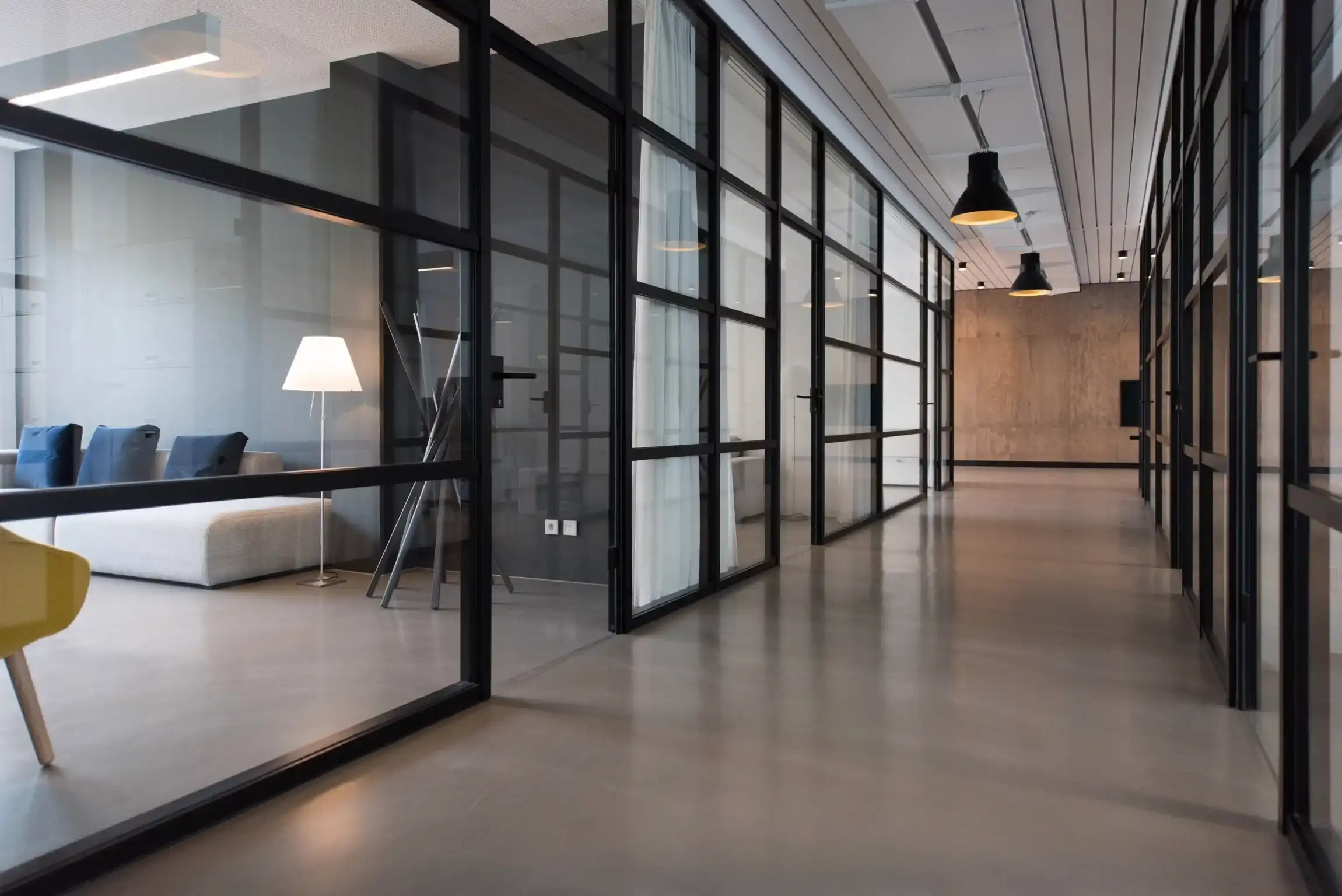
Offices, retail, F&B and clinics — design coordination, authority permits, construction and handover under one contract, phased around trading hours.
Commercial renovation is separated from residential work by three things: permits, life safety, and the fact that the space usually has to keep trading.
A villa can be emptied and handed over to a contractor. A restaurant, a clinic or an occupied office cannot. That constraint shapes the programme, the working hours and often the cost more than the finishes do.
RSK handles commercial renovation and fit out across Dubai, covering design coordination, authority permits, construction and handover under one contract.
Every commercial project runs against two rulebooks at once: the authority's and the landlord's.
The landlord's fit out guidelines set ceiling heights, permitted finishes, service routes, working hours and often an approved contractor list. The authority sets the permit route, which depends on where the building sits rather than what type of business you run.
On top of that sits life safety. Any change to partitions, ceilings or occupancy affects fire detection, sprinkler coverage and escape routes, and that is a Civil Defence matter rather than a design preference. The construction itself is largely the same trades as residential work. The difference is coordination and compliance.
Phasing is what makes a live refurbishment possible, and it has to be planned rather than improvised. The things that need agreeing before a live project starts:
Out-of-hours working carries a labour premium, and building access outside normal hours often needs its own permission. Both belong in the quotation rather than appearing later.
Nearly always, and the authority depends on the address rather than the building or the business type.
The landlord or building management will also have its own approval process, and frequently an approved contractor list. That document should be read before any design work begins, because it constrains the design.
Priced from drawings, and heavily affected by whether the space stays open. What moves the number:
Permits and long-lead items usually determine the programme, not the construction.
Design and drawings come first, then authority and landlord submissions, then site works. Approval turnaround is the least predictable part, and Civil Defence submissions in particular cannot be rushed at the end, because handover depends on them.
Long-lead items are the other risk: furniture, made-to-measure glazing, feature lighting, specialist flooring and any equipment specific to the sector. Those selections belong at design stage.
Ask for the BOQ split by package. A single figure tells you nothing about whether MEP, life safety and as-built documentation are inside it.
Send us the location, the area, the sector and whether the space will keep trading during works, along with the landlord's fit out guidelines if you have them. We will confirm which permits apply and issue a BOQ split by package.